The cleaning products aisle is one of the most chemically intensive sections of any supermarket. Many conventional products contain ingredients linked to respiratory irritation, hormone disruption, and environmental damage. The good news is that effective alternatives exist for virtually every cleaning task.
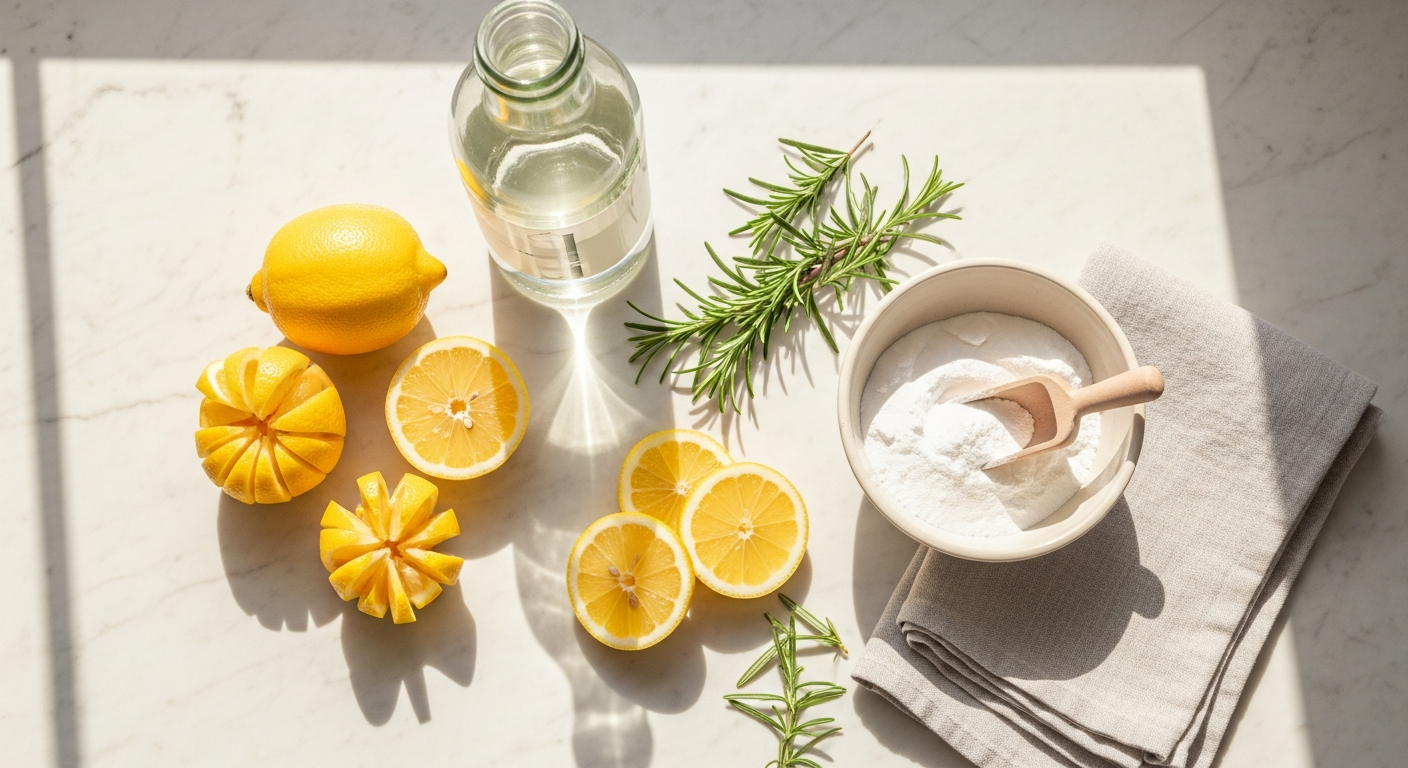
The kitchen is where most people start their non-toxic cleaning journey. For general surface cleaning, a simple solution of white vinegar and water (1:1 ratio) handles most tasks. Adding a few drops of essential oil like tea tree or lemon provides additional antimicrobial properties. For tougher jobs, bicarbonate of soda creates a gentle abrasive that works wonders on hobs and sinks.
Bathroom cleaning often relies on harsh chemicals like bleach and strong acids. Hydrogen peroxide (3% solution) is an effective alternative for disinfecting surfaces. For limescale, citric acid dissolved in warm water works remarkably well and is far less damaging to both your respiratory system and plumbing.
Laundry is an area where many people unknowingly expose themselves to a cocktail of synthetic fragrances and optical brighteners. These chemicals remain on fabrics and in direct contact with skin for extended periods. Fragrance-free, plant-based detergents are widely available and perform well in independent testing.
Floor cleaning depends on the surface type, but most can be effectively cleaned with warm water and a small amount of Castile soap. Microfibre mops are excellent at picking up dirt and bacteria without chemical assistance.
When transitioning to non-toxic cleaning, the most important change is improving ventilation during and after cleaning. Even natural cleaning products benefit from good airflow.
Disclaimer
This content is for educational and informational purposes only. It does not constitute medical advice, diagnosis, or treatment. Always consult a qualified healthcare professional before making changes to your health routine.