Fermented foods have been fundamental to human diets across every inhabited continent for thousands of years. Long before we understood the microbiology involved, traditional cultures developed sophisticated fermentation techniques that preserved food, enhanced nutrition, and supported health.
Fermentation is essentially a controlled decomposition process where microorganisms (bacteria, yeasts, or moulds) convert sugars and starches into acids, gases, or alcohol. This process not only preserves food but often creates new nutrients and beneficial compounds not present in the raw ingredients.
A landmark 2021 study published in Cell by researchers at Stanford found that a diet high in fermented foods increased microbiome diversity and decreased markers of inflammation. Participants who consumed six servings of fermented foods daily for 10 weeks showed significant improvements in 19 inflammatory markers.
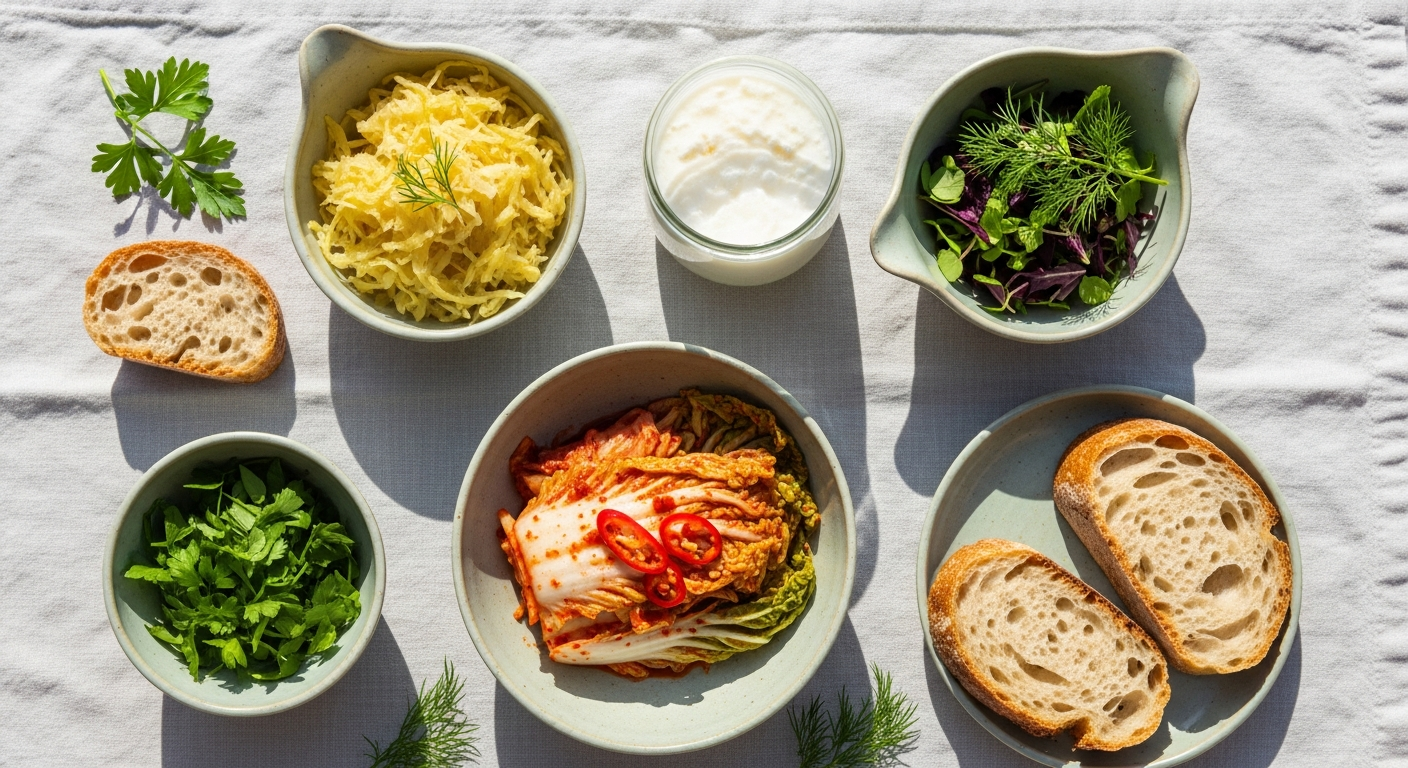
Sauerkraut is perhaps the simplest fermented food to make at home. The basic process requires only cabbage and salt: shredded cabbage packed tightly with 2% salt by weight and left at room temperature for 1-4 weeks. The naturally present Lactobacillus bacteria do all the work, converting sugars into lactic acid and creating an environment hostile to harmful bacteria.
Kombucha, a fermented tea, has become hugely popular but commercial versions vary enormously in quality. Many mass-produced kombuchas are pasteurised (killing the beneficial bacteria) and contain significant added sugar. Look for raw, unpasteurised versions with low sugar content.
Disclaimer
This content is for educational and informational purposes only. It does not constitute medical advice, diagnosis, or treatment. Always consult a qualified healthcare professional before making changes to your health routine.