The human gut microbiome contains trillions of microorganisms, including at least 1,000 different species of known bacteria. This complex ecosystem plays a role in virtually every aspect of health, from digestion and immunity to mental health and metabolism.
Research over the past decade has transformed our understanding of the gut-brain axis. The gut produces approximately 95% of the body's serotonin and contains more neurons than the spinal cord. This explains the growing body of evidence linking gut health to conditions like anxiety, depression, and even neurodegenerative diseases.
Diversity is the key metric for a healthy microbiome. Studies of traditional societies that maintain diverse diets show significantly greater microbial diversity compared to Western populations. The American Gut Project found that people who eat more than 30 different plant species per week have notably more diverse microbiomes than those who eat fewer than 10.
Prebiotic fibres are arguably more important than probiotics for most people. These non-digestible fibres feed beneficial gut bacteria and are found in foods like garlic, onions, leeks, asparagus, bananas, and oats. Focusing on prebiotic-rich foods creates an environment where beneficial bacteria can flourish.
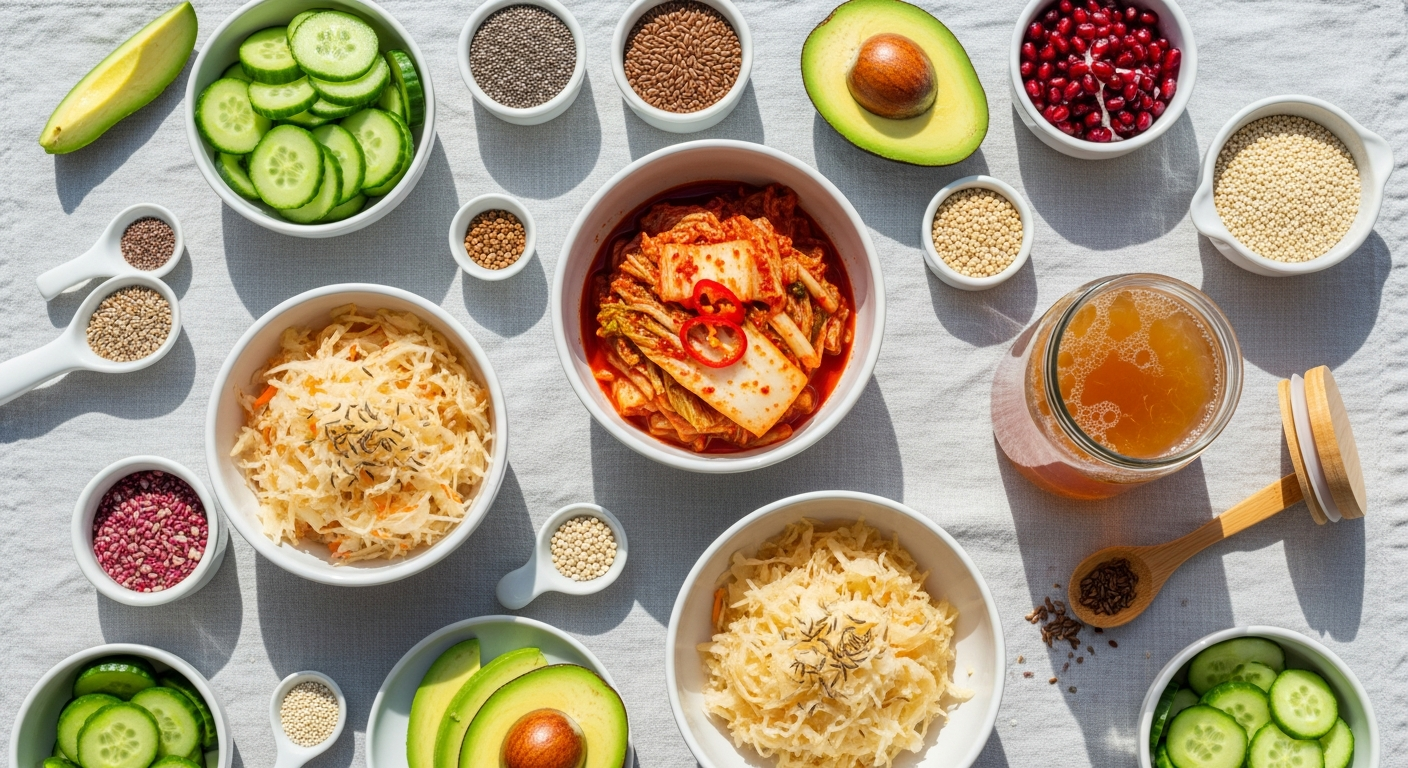
Fermented foods provide living microorganisms that can contribute to gut diversity. Traditional fermented foods like sauerkraut, kimchi, kefir, and miso have been dietary staples across cultures for millennia. When choosing fermented products, look for unpasteurised versions that contain live cultures.
Disclaimer
This content is for educational and informational purposes only. It does not constitute medical advice, diagnosis, or treatment. Always consult a qualified healthcare professional before making changes to your health routine.