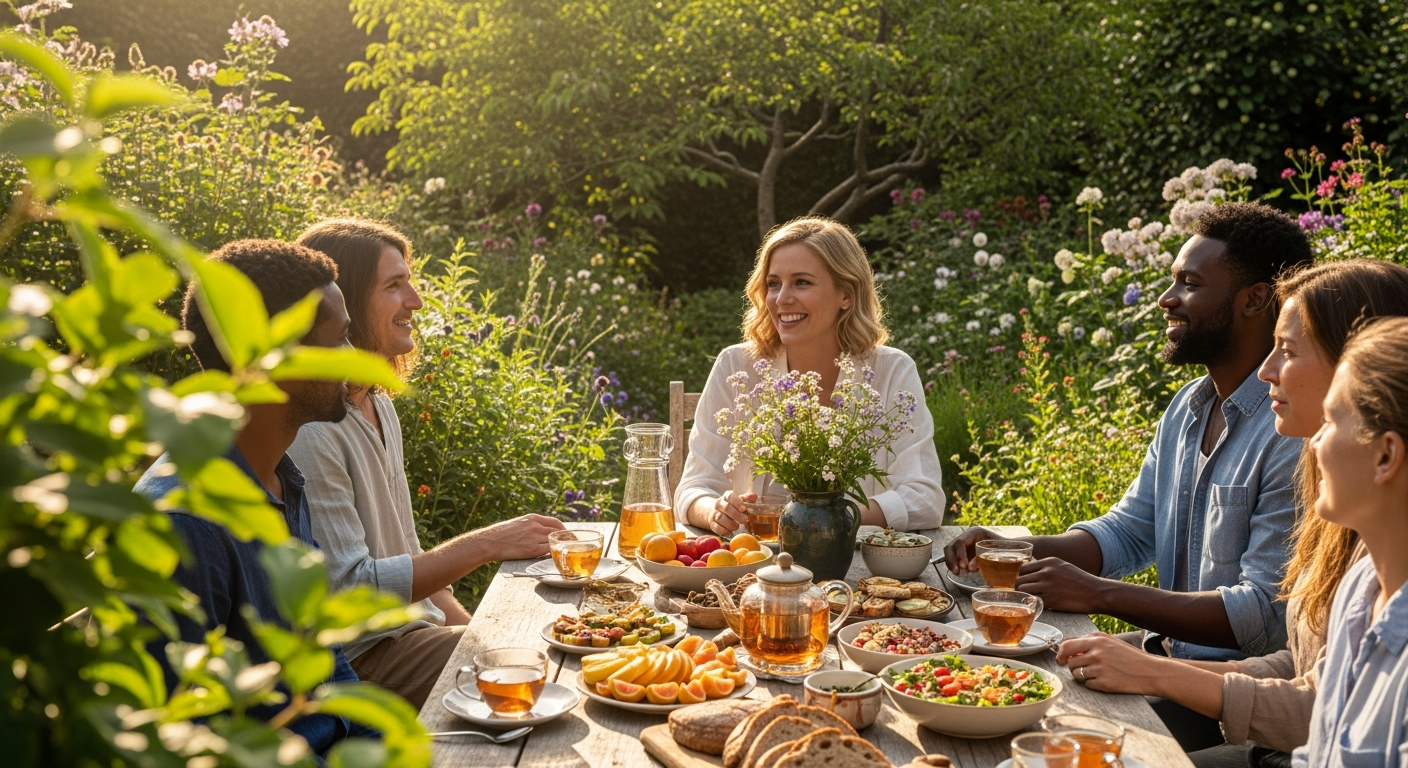
Making significant lifestyle changes is considerably easier with support. Building a community around clean living values provides accountability, shared knowledge, and the social reinforcement that makes sustainable change possible.
Online communities can provide valuable support, but they require careful curation. Look for groups moderated by knowledgeable individuals who maintain evidence-based standards. The best online communities encourage questions, tolerate uncertainty, and actively discourage fear-based messaging or absolutist thinking.
Local connections often prove more valuable than online ones. Farmers markets, organic food co-operatives, community gardens, and local environmental groups attract people who share clean living values. These settings provide natural opportunities for relationship building around shared activities rather than abstract ideology.
Starting a small group can be remarkably simple and effective. A monthly book club focused on health and environment titles, a cooking group exploring traditional food preparation, or a walking group in local green spaces all create regular touchpoints for connection and learning.
Mentorship relationships accelerate learning and provide perspective. Someone further along the clean living journey can help you prioritise changes, avoid common pitfalls, and maintain motivation during the inevitable moments when convenience tempts you back toward conventional choices.
Disclaimer
This content is for educational and informational purposes only. It does not constitute medical advice, diagnosis, or treatment. Always consult a qualified healthcare professional before making changes to your health routine.